
Into The Rift is the ninth and penultimate installment of the Dropzone series of military sci-fi books. It continues from directly where Ruinworld (Dropzone #8) left off, with the same characters.
The Dropzone series is set in the same universe as my previous sci-fi books – Conversations With Droids, The Kassini Division and Rise Of The Exiles – but it takes place in 2841, a half-century before the events of the other books.
Here’s the blurb for the latest installment:
Welcome to hell. Bring sunscreen.
Waking on a hostile desert world with no ship, no weapons, no way home and a disturbing lack of fnarrg, the squad discovers a landscape shaped by an ancient alien civilisation.
And something about the planet is very, very wrong.
Beneath the dunes are impossible relics.
The wildlife can reach into their minds.
Terraforming towers are driving everyone insane.
Even reality itself is beginning to misbehave.
And with every sunset, the planet comes alive – and it wants them dead.
Now the Revenants must escape a world where they can’t trust their senses, their memories or even the shifting sands beneath their feet.
Nine drops in and the Revenants are in more trouble than ever before. They barely escaped the last mission with their lives and now, they wake in a world where they know nothing and can take nothing for granted. It’s also that least hospitable of all the sci-fi backdrops: the freaky desert planet, where even if you’re just popping home to visit Uncle Owen and Aunt Beru, life is a continuous fight for survival.
Knowing my time with the squad is drawing to a close, I figured that nine books in, readers are going to allow me a little headroom to explore more surreal narrative possibilities. So this is my attempt to tap into and explore the undercurrent of psychic strangeness that underpins some of the more disturbing and rewarding sci-fi ideas in the mainstream.
As well as focusing on revealing the details of this enigmatic setting, I made more effort to explore the margins of my characters’ interior lives this time. It’s something I’d deliberately shied away from so far because I wanted to foreground action and deliver entertaining, fast-paced military SF, but I figure, what the hell – you can have both.
I really hope you enjoy this slightly slower-paced, slightly more surreal ride, because I spent around a year on and off with this book, by far the longest time I’ve spent on any of my titles…
And now, as usual, here are some of the indirect inspirations that writing Into The Rift brought to mind…
1] Solaris (1972)

Andrei Tarkovsky’s Solaris, an adaptation of Stanislaw Lem’s novel, has always cast a long Soviet shadow over sci-fi. Combining none-more-70s bleakness with the solipsistic theme that humanity is destined not to conquer space or understand the universe so much as to always be held hostage by their own unconscious minds, the film’s grandiose hard sci-fi philosophical musings echo through all manner of later works.
I loved its setting: dilapidated space stations, sentient oceans, psychiatrists evaluating hallucinations, psychic disturbances manifesting in oblique ways… this is the real shizzle.
2] Annihilation Jeff VanderMeer (2014)
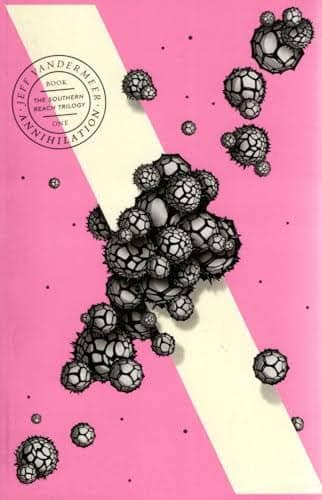
Jeff VanderMeer’s beautifully conceived dreamstate of a novel, whose atmosphere was captured admirably in Alex Garland’s 2018 film adaptation, is a book I return to regularly. The way its plot unfurls like a telepathic alien plant, how its setting embeds itself in your mind’s eye and the exploration of the main character’s back story are all masterful. Plus, the concept of the Shimmer and the way it just appears unbidden in our everyday world like a hallucination, then resists any attempt to be understood or conquered, is reason enough to visit this still underrated, classic SF work.
3] The Electric State Simon Ståhlenhag (2018)
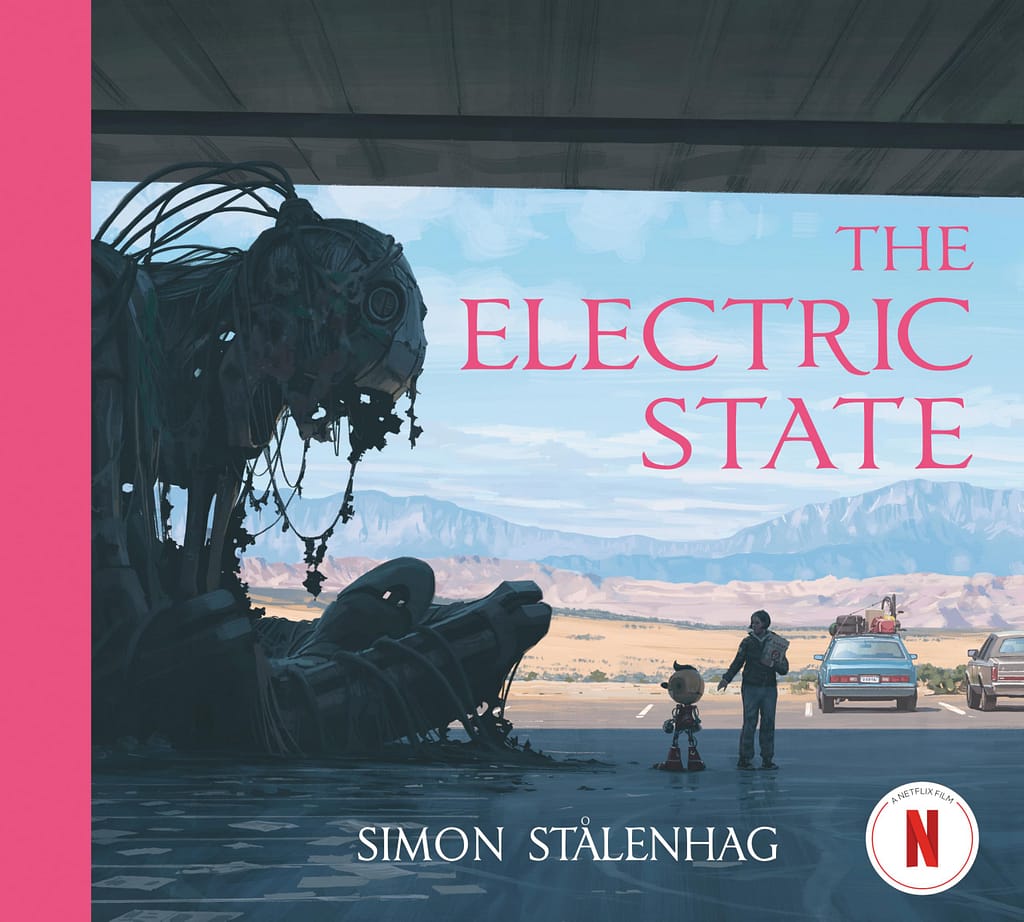
Simon Ståhlenhag’s graphic novel is a melancholy road trip. It journeys through an alternate California ravaged by a hyper-capitalist apocalypse, caused by addiction to the tech that was used to pilot drones in a US civil war in the 1990s, following the tragic tale of a teenage orphan and her robot familiar.
You could just ignore the storyline and the narrative detail and only focus on the sublime images the Swedish artist somehow dredged out of his unconscious mind, but you’d be missing out on a luminous and deeply resonant work.
4] Roadside Picnic Arkady and Boris Strugatsky (1972)
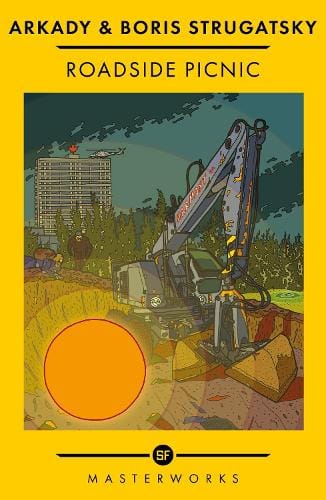
More bizarre and philosophical 70s Russian fiction here, this profoundly peculiar meditation written by brothers Arkady and Boris Strugatsky (and also later made into a film in 1979 by Andrei Tarkovsky, called Stalker) is an establishing text for the rarefied sci-fi sub-genre of ‘zone fiction’.
After an exttraterrestrial visitation, its characters embark on expeditions into one of six Zones in search of valuable abandoned alien artefacts, their minds warping as they chase their prizes and the central mystery – who were the alien visitors, what was their purpose – is never directly addressed.
5] Memories Of The Space Age J.G. Ballard (1982)

My favourite of J. G. Ballard’s short stories, this oneiric treatise on psychological breakdown is set in a deserted, ruined Cape Kennedy that’s being reclaimed by nature, during a time sickness caused by astronauts returning home during the Space Age. Its destabilising central protagonist, a NASA scientist living in an abandoned hotel with his time-sick wife, under attack from light aircraft, is Ballard at his surreal best.
Here are some quick reads with more info about Fleet Rats (Dropzone #1), Parasite (Dropzone #2), Shadow Puppets (Dropzone #3, Derelict (Dropzone #4),Notorious (Dropzone #5),Infiltrator (Dropzone #6) and Winter Station (Dropzone #7) and Ruinworld (Dropzone #8). I hope you enjoy them… and if you’ve read and enjoyed my Kassini books, I strongly suggest you give the Dropzone series a whirl, as there are many shared aspects you’ll instantly recognise.
If you enjoy these or indeed any of my books, tell your sci-fi-loving friends and please leave a positive review on Amazon.